Backpacking Gear Checklist for Beginners: Complete Big 3 & Kitchen Loadout
Cutting unnecessary pack weight transforms exhausting climbs into effortless trail days. Here is the proven Big Three + backcountry kitchen gear checklist every beginner should start with.
By Eric Lindstrom (Senior Editorial Director & Wilderness Guide) · 11 min read
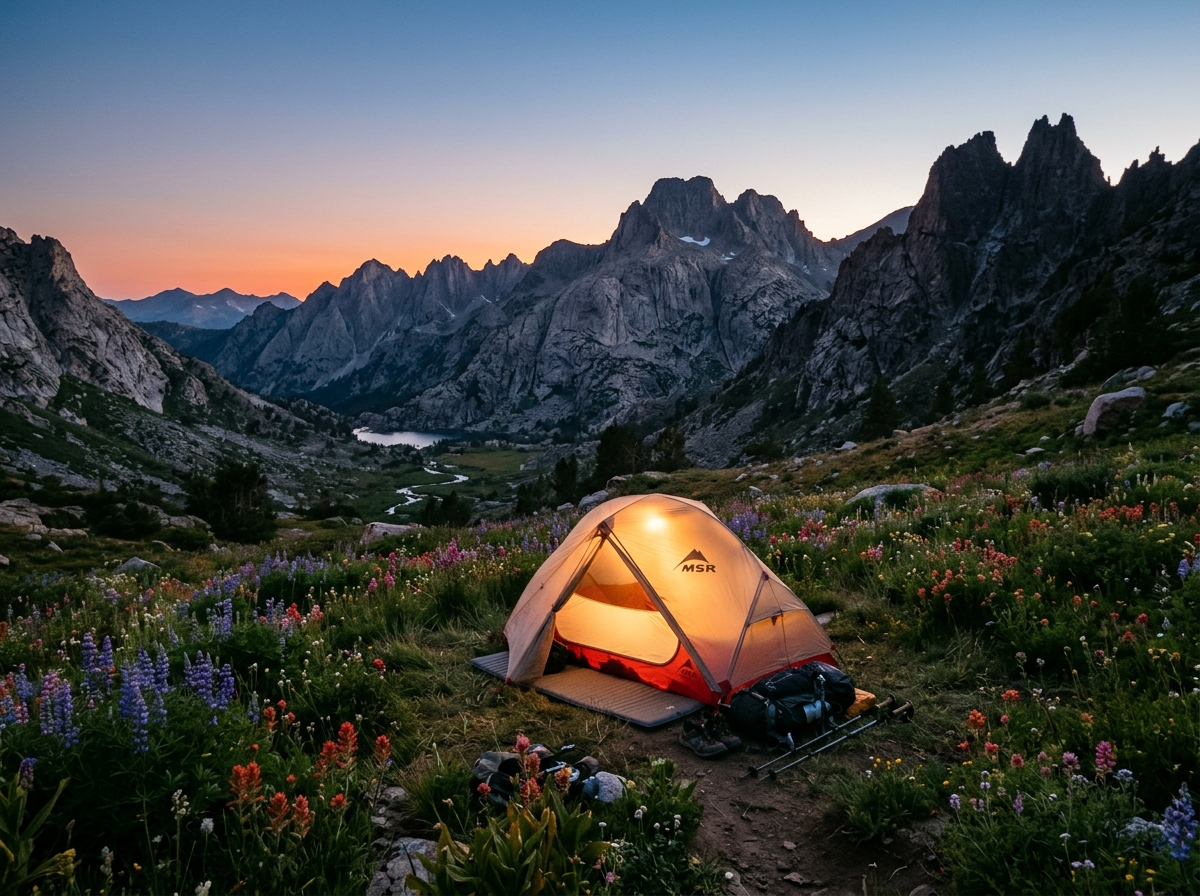
1. Understanding the Big Three (Shelter, Sleep System, Backpack)
Nearly 65% of a backpacker’s base weight lives inside just three items: your shelter, your sleep system (pad + quilt/bag), and your backpack itself. Upgrading cookware saves ounces; dialing in your Big Three saves five to eight pounds instantly.
Always buy your backpack last. Once you verify how compact your shelter and insulation compress, you can select a 50–60 liter framed pack that hugs your hips without hauling dead space.
2. Field-Tested Shelter & Backpack Anchor Picks
For hikers prioritizing freestanding versatility above tree line, the Big Agnes Copper Spur HV UL2 delivers steep wall headspace and storm-worthy 3-season stability at just 3 lbs 2 oz—light enough to split between two partners at under 1.6 lbs per person.
Pair it with the Osprey Exos 58 (2 lbs 12 oz), whose suspended AirSpeed mesh backpanel stops sweaty hot spots on warm ascents while transferring load cleanly onto your pelvis.
- Big Agnes Copper Spur HV UL2 Ultralight Backpacking Tent (Best Overall — 3 lbs 2 oz (1.42 kg), $499 – $549): Wilderness backpacking where self-standing pitch geometry and dual vestibules are required.
- Osprey Packs Exos 58 Ultralight Backpack (Best for Backpacking — 2 lbs 12 oz (1.25 kg), $240 – $270): Multi-day thru-hiking and lightweight trekking with superior trampoline back ventilation.
- Therm-a-Rest NeoAir XTherm NXT Insulated Sleeping Pad (Best Cold Weather — 15.5 oz / 439 g (Regular), $239 – $259): Winter alpine expeditions, sub-zero snow camping, and cold hammock under-insulation.
3. Trail Kitchen, Water Filtration & Night Navigation
Keep trail support systems simple, field-repairable, and under 10 ounces combined:
• Stove: The 2.6 oz MSR PocketRocket 2 boils 1 liter of water in 3.5 minutes and folds inside a titanium mug.
• Water Filter: The 3.0 oz Sawyer Squeeze filters up to 100,000 gallons down to 0.1 microns and threads directly onto lightweight Smartwater bottles.
• Lighting: The 2.6 oz Black Diamond Spot 400-R eliminates disposable AAA waste and survives torrential rain with an IP67 waterproof seal.
- MSR PocketRocket 2 Ultralight Camp Stove (Best Lightweight — 2.6 oz (73 g), $45 – $55): Backpackers needing a dependable, palm-sized stove for boiling freeze-dried meals.
- Sawyer Products Sawyer Squeeze Water Filtration System (Best Overall — 3.0 oz (85 g), $38 – $45): Wilderness water purification from rivers, alpine lakes, and backcountry streams.
- Black Diamond Spot 400-R Rechargeable Headlamp (Best Overall — 2.6 oz (73 g), $59 – $69): Night navigation, camp cooking, reading in your hammock, and emergency trail descents.
4. Target Base Weights & Smart Trimming
Aim for a total dry base weight (everything inside your pack excluding food, water, and stove fuel) between 12 and 16 pounds for comfortable 3-season trips. Skip bulky cotton sweatshirts, heavy full-tang hatchets, and duplicate electronics.
Before zipping your pack, run your trip profile through our Smart Packing Checklist tool to verify exact ounce totals and flag missing safety layers.
Frequently Asked Questions
- How heavy should a beginner backpacking pack be?
- A loaded pack including food and water should stay under 20% of your body weight. Targeting a 12 to 16 pound dry base weight keeps weekend pack totals comfortably around 22 to 26 pounds.
- Do I need a 58L or 65L backpack for a 3-day trip?
- A 55L to 58L pack like the Osprey Exos 58 comfortably holds 3 to 5 days of food, a bear canister, and 3-season shelter gear without encouraging overpacking.
- How do I keep my Sawyer Squeeze filter from freezing overnight?
- Water expands when frozen inside hollow-fiber membranes, which can crack the microscopic tubes invisibly. Place your filter inside a sealed zip bag inside the foot of your sleeping bag whenever overnight temperatures approach 32°F.